
Research Feeds

View All
Characterizing the gut microbiota in females with infertility and preliminary results of a water-soluble dietary fiber intervention study A prebiotic dietary pilot intervention restores faecal metabolites and may be neuroprotective in Parkinson’s Disease Diagnosis of the menopause: NICE guidance and quality standards Causes of Death in End-Stage Kidney Disease: Comparison Between the United States Renal Data System and a Large Integrated Health Care System Factors affecting the absorption and excretion of lead in the rat Factors associated with age at menarche, menstrual knowledge, and hygiene practices among schoolgirls in Sharjah, UAE Cadmium transport in blood serum The non-pathogenic Escherichia coli strain Nissle 1917 – features of a versatile probiotic Structured Exercise Benefits in Euthyroid Graves’ Disease: Improved Capacity, Fatigue, and Relapse Gut Microbiota Regulate Motor Deficits and Neuroinflammation in a Model of Parkinson’s Disease A Pilot Microbiota Study in Parkinson’s Disease Patients versus Control Subjects, and Effects of FTY720 and FTY720-Mitoxy Therapies in Parkinsonian and Multiple System Atrophy Mouse Models Dysbiosis of the Saliva Microbiome in Patients With Polycystic Ovary Syndrome Integrated Microbiome and Host Transcriptome Profiles Link Parkinson’s Disease to Blautia Genus: Evidence From Feces, Blood, and Brain Gut microbiota modulation: a narrative review on a novel strategy for prevention and alleviation of ovarian aging Long-term postmenopausal hormone therapy and endometrial cancer

Role of Cholestyramine in Refractory Hyperthyroidism: A Case Report and Literature Review

March 18, 2025

  • Autoimmune Diseases
    Autoimmune Diseases

    Autoimmune disease is when the immune system mistakenly attacks the body's tissues, often linked to imbalances in the microbiome, which can disrupt immune regulation and contribute to disease development.

  • Metals
    Metals

    Heavy metals play a significant and multifaceted role in the pathogenicity of microbial species.

  • Microbes
    Microbes

    Microbes, short for microorganisms, are tiny living organisms that are ubiquitous in the environment, including on and inside the human body. They play a crucial role in human health and disease, functioning within complex ecosystems in various parts of the body, such as the skin, mouth, gut, and respiratory tract. The human microbiome, which is […]

Last Updated: 2024-06-23

Microbiome Signatures identifies and validates condition-specific microbiome shifts and interventions to accelerate clinical translation. Our multidisciplinary team supports clinicians, researchers, and innovators in turning microbiome science into actionable medicine.

Karen Pendergrass

Karen Pendergrass is a microbiome researcher specializing in microbiome-targeted interventions (MBTIs). She systematically analyzes scientific literature to identify microbial patterns, develop hypotheses, and validate interventions. As the founder of the Microbiome Signatures Database, she bridges microbiome research with clinical practice. In 2012, based on her own investigative research, she became the first documented case of FMT for Celiac Disease—four years before the first published case study.

What was studied?

The study investigated the role of cholestyramine as an additional treatment for refractory iodine-induced hyperthyroidism in a patient who did not respond to conventional therapies.

Who was studied?

A 52-year-old female patient with a history of goiter who developed iodine-induced hyperthyroidism following a CT scan with contrast. The patient had obstructive symptoms and was unresponsive to standard treatments, including dexamethasone, carbimazole, and propranolol.

What were the most important findings?

After adding cholestyramine, the patient’s FT4 levels decreased by 30% within 5 days and normalized by 12 days.

What are the greatest implications of this study?

Cholestyramine can be an effective adjunct therapy for managing refractory iodine-induced hyperthyroidism, suggesting a potential new treatment avenue for similar cases, such as Grave’s Disease (GD). This case highlights the need for alternative treatments when conventional therapies fail and emphasizes the utility of cholestyramine in rapid thyroid hormone reduction.
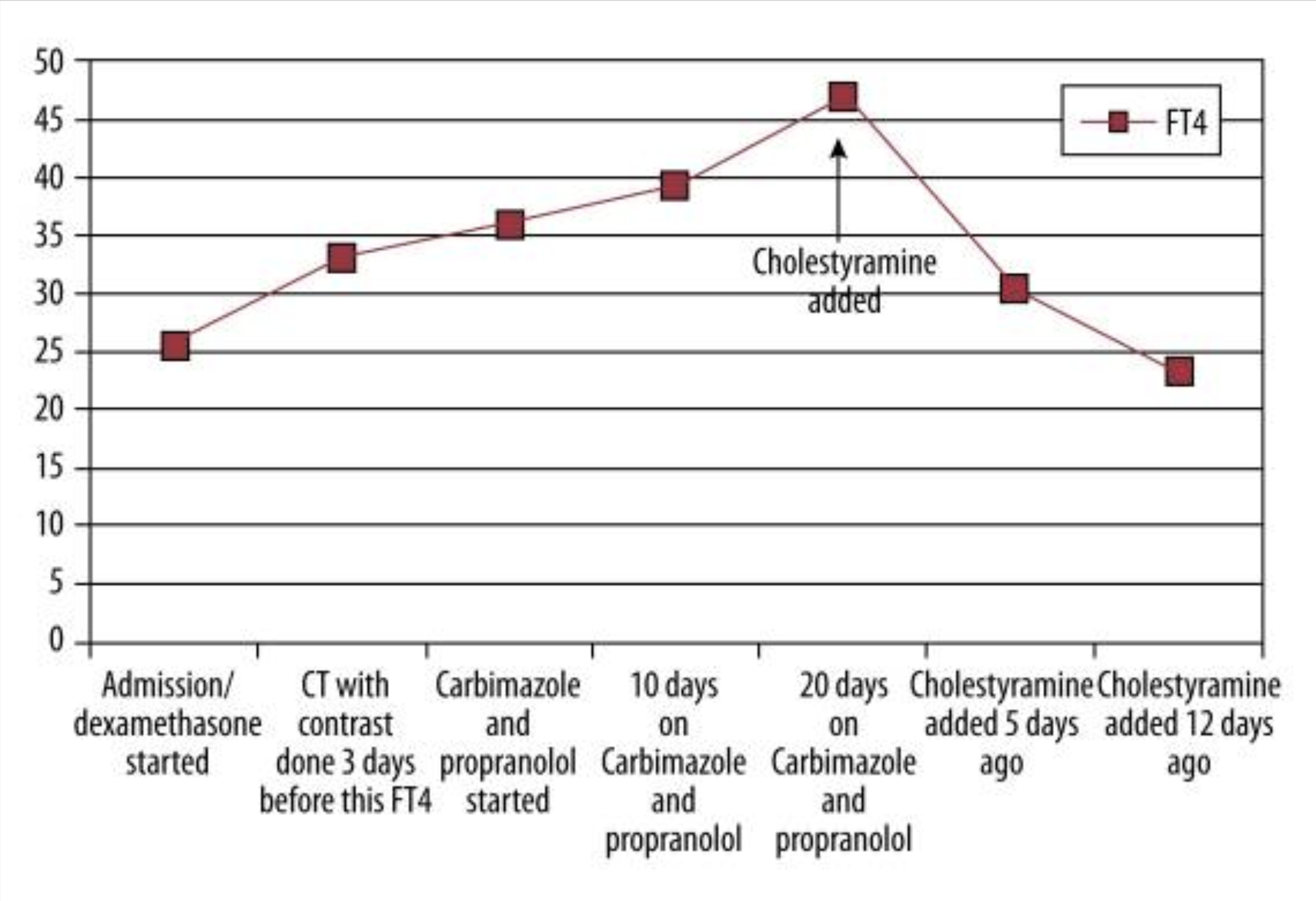
Role of Cholestyramine in Refractory Hyperthyroidism A Case Report and Literature Review
Join the Roundtable

Contribute to published consensus reports, connect with top clinicians and researchers, and receive exclusive invitations to roundtable conferences.