

Research Feeds

View All
Characterizing the gut microbiota in females with infertility and preliminary results of a water-soluble dietary fiber intervention study A prebiotic dietary pilot intervention restores faecal metabolites and may be neuroprotective in Parkinson’s Disease Diagnosis of the menopause: NICE guidance and quality standards Causes of Death in End-Stage Kidney Disease: Comparison Between the United States Renal Data System and a Large Integrated Health Care System Factors affecting the absorption and excretion of lead in the rat Factors associated with age at menarche, menstrual knowledge, and hygiene practices among schoolgirls in Sharjah, UAE Cadmium transport in blood serum The non-pathogenic Escherichia coli strain Nissle 1917 – features of a versatile probiotic Structured Exercise Benefits in Euthyroid Graves’ Disease: Improved Capacity, Fatigue, and Relapse Gut Microbiota Regulate Motor Deficits and Neuroinflammation in a Model of Parkinson’s Disease A Pilot Microbiota Study in Parkinson’s Disease Patients versus Control Subjects, and Effects of FTY720 and FTY720-Mitoxy Therapies in Parkinsonian and Multiple System Atrophy Mouse Models Dysbiosis of the Saliva Microbiome in Patients With Polycystic Ovary Syndrome Integrated Microbiome and Host Transcriptome Profiles Link Parkinson’s Disease to Blautia Genus: Evidence From Feces, Blood, and Brain Gut microbiota modulation: a narrative review on a novel strategy for prevention and alleviation of ovarian aging Long-term postmenopausal hormone therapy and endometrial cancer
microsporum canis m. canis icon

Did you know?
Microsporum canis arthrospores can remain viable in the environment for up to 18 months, making it one of the most persistent and contagious dermatophytes in both veterinary and human settings.[x]

Microsporum canis (M. canis)

Researched by:

  • Karen Pendergrass ID
    Karen Pendergrass

    User avatarKaren Pendergrass is a microbiome researcher specializing in microbiome-targeted interventions (MBTIs). She systematically analyzes scientific literature to identify microbial patterns, develop hypotheses, and validate interventions. As the founder of the Microbiome Signatures Database, she bridges microbiome research with clinical practice. In 2012, based on her own investigative research, she became the first documented case of FMT for Celiac Disease—four years before the first published case study.

    Read More

November 15, 2025

Microsporum canis (M. canis) is a zoophilic dermatophyte common in cats and dogs, responsible for 90% of feline dermatophytoses worldwide.[1][2] It has significant zoonotic potential, transmitting to humans through fomites or direct animal contact, causing severe superficial mycosis. M. canis is considered anthropo-zoophilic and can infect pediatric or immunocompromised patients, causing severe inflammatory responses such […]

research-feed Research feed

Researched by:

  • Karen Pendergrass ID
    Karen Pendergrass

    User avatarKaren Pendergrass is a microbiome researcher specializing in microbiome-targeted interventions (MBTIs). She systematically analyzes scientific literature to identify microbial patterns, develop hypotheses, and validate interventions. As the founder of the Microbiome Signatures Database, she bridges microbiome research with clinical practice. In 2012, based on her own investigative research, she became the first documented case of FMT for Celiac Disease—four years before the first published case study.

    Read More

Last Updated: 2025-11-15

Microbiome Signatures identifies and validates condition-specific microbiome shifts and interventions to accelerate clinical translation. Our multidisciplinary team supports clinicians, researchers, and innovators in turning microbiome science into actionable medicine.

See full history

Karen Pendergrass

Karen Pendergrass is a microbiome researcher specializing in microbiome-targeted interventions (MBTIs). She systematically analyzes scientific literature to identify microbial patterns, develop hypotheses, and validate interventions. As the founder of the Microbiome Signatures Database, she bridges microbiome research with clinical practice. In 2012, based on her own investigative research, she became the first documented case of FMT for Celiac Disease—four years before the first published case study.

Overview

Microsporum canis (M. canis) is a zoophilic dermatophyte common in cats and dogs, responsible for 90% of feline dermatophytoses worldwide.[1][2] It has significant zoonotic potential, transmitting to humans through fomites or direct animal contact, causing severe superficial mycosis. M. canis is considered anthropo-zoophilic and can infect pediatric or immunocompromised patients, causing severe inflammatory responses such as inflammatory tinea capitis (including Celsus’ Cherion), favus, tinea barbae, and tinea corporis.[3] It is also reported as the primary agent of dermatophytosis in domestic cats in the US and a common cause of tinea capitis in humans in parts of Europe.[4]

Antifungal Resistance

The increasing use of antifungal agents has led to rising drug resistance, posing a significant barrier to effective treatment.[5] Resistance mechanisms include efflux pump overexpression, mutation of drug target enzymes, and biofilm formation. M. canis and generally have lower resistance rates relative to other dermatophytes.[6] However, recalcitrant infections are well-documented for M. canis. [7]

Pathogenicity

Microsporum canis exhibits a unique capacity to invade, colonize, and derive nutrients from keratinized host tissues through the secretion of proteolytic enzymes and other virulence factors.[8] The infection begins with the adherence of arthroconidia to the host epidermis via specialized fungal surface proteins, a process facilitated by disruptions in the stratum corneum such as maceration or occlusion.[9] Remarkably, these arthrospores can remain infectious in the environment for up to 18 months, contributing to their high transmissibility.[10] A central feature of dermatophyte pathogenicity is their ability to degrade keratin, a complex structural protein, using a class of enzymes known as keratinases. These enzymes solubilize keratin and are considered key virulence determinants during tissue invasion. Keratinase production is typically enhanced under alkaline conditions (pH ~7.5) and at temperatures ranging from 35°C to 50°C. M. canis, in particular, synthesizes a keratinase enzyme known as Ecasa, which facilitates its ability to colonize and persist within host tissues.[11][12]

Morphology

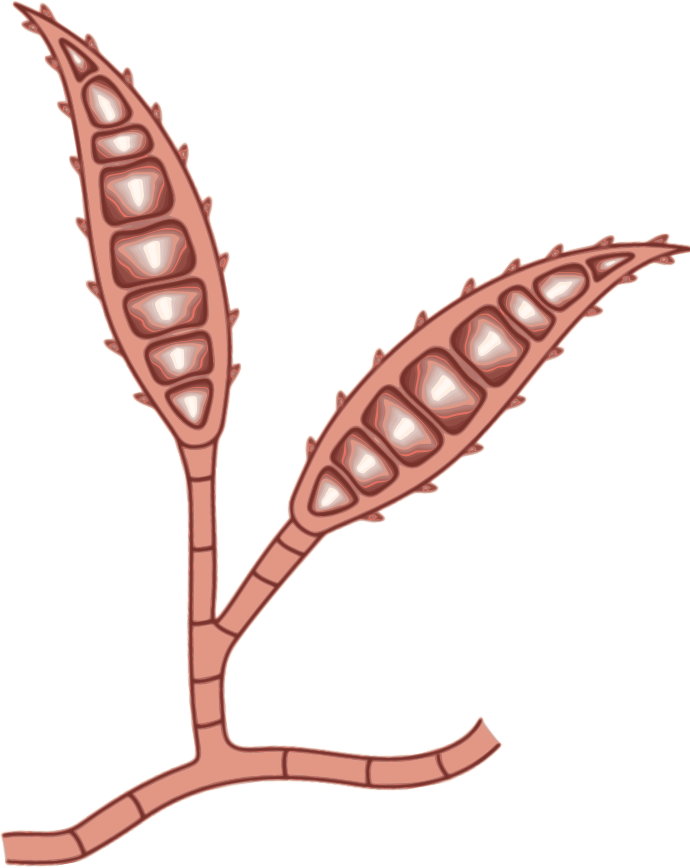
Microsporum canis is a filamentous, anamorphic dermatophyte that primarily reproduces asexually and exhibits distinct morphological and physiological traits optimized for keratin degradation and host adaptation.[13][14] Macroscopically, colonies grown on Sabouraud Dextrose Agar (SDA), Sabouraud Glucose Agar (SGA), or Potato Dextrose Agar (PDA) appear white with a bright yellow periphery or lemon-yellow base and display a silky center; the reverse side may range from yellow to orange.[15] These colonies grow rapidly, with increased diameters observed under zinc-sufficient conditions (e.g., 1000 nM Zn), while growth is markedly impaired under zinc deficiency. [16][17] Microscopically, M. canis produces thick-walled, spindle-shaped macroconidia with up to 15 septa and smaller microconidia, but conidiation is suppressed in zinc-limiting environments (200–800 nM), where only unstructured “flake fungus blocks” may form.[18] A ZafA-knockout strain further demonstrates the zinc dependence of conidiogenesis, with severely diminished hyphal and conidial development.[19] The fungus thrives at 28–30 °C but shows optimal keratinase activity at 35–50 °C and pH ~7.5.[20]

Virulence Factors

M. canis employs a multifaceted arsenal of virulence factors to colonize keratinized tissues and evade host defenses. These include extracellular enzymes like keratinases, subtilisins, metalloproteases, and aminopeptidases, which degrade host proteins for nutrient acquisition and tissue invasion. [21] Dipeptidyl peptidases, and hemolysins further facilitate colonization by promoting immune evasion and iron acquisition. [22] Catalases, ureases, and heat shock proteins enhance fungal survival under oxidative and thermal stress, while biofilm formation contributes to chronicity and antifungal resistance.[23] Intracellularly, virulence is driven by conserved genes like ZafA, SUB3, and SSU1, which regulate metal acquisition and proteolytic activity essential for pathogenicity.[24] Together, these factors enable M. canis to adapt to host environments, resist immune clearance, and maintain infection, particularly under nutrient-limited or stressed conditions. Targeting these virulence mechanisms may offer novel antifungal strategies.

Virulence FactorsDescription and Role
Keratinases (e.g., Ecasa)Proteases that degrade keratin to enable tissue invasion. Optimal activity at pH ~7.5 and 35–50°C. Higher expression in symptomatic cases.[25]
Metalloproteases (MEP1–3)Zinc-dependent metalloprotease M36 fungalysins with keratinolytic, elastinolytic, and collagenolytic activity; essential for adhesion and tissue invasion.[26]
Subtilisins (Sub1–3)Serine proteases contributing to keratin degradation, arthroconidia adhesion, and anchorage to the host surface and tissue invasion. Sub3 is a well-characterized virulence marker.[27]
Aminopeptidases (Lap1–2)Involved in keratin breakdown and nitrogen assimilation under alkaline conditions.[28]
Dipeptidyl Peptidases (DppIV, DppV)Facilitate nutrient acquisition and tissue colonization; degrade elastin and collagen.[29]
Aspartyl ProteasesLess characterized in M. canis; suspected to degrade host defense proteins based on in vitro/ex vivo data.[30]
HemolysinsContribute to iron acquisition and cytotoxicity. Correlated with azole resistance.[31][32]
CatalasesDetoxify reactive oxygen species; higher activity in lesion-associated strains and correlated with antifungal susceptibility.[33][34]
UreasesProvide nitrogen source; increase pH; used taxonomically. Urease activity varies by strain.[35]
Serine Hydrolase (FSH1)Functions as an esterase regulating growth, pigmentation, and conidiation; knockout reduces virulence.[36][37]
Biofilms/DermatophytomasStructured hyphal networks embedded in ECM; increase antifungal resistance and promote chronic infection.[38]
Heat Shock Proteins (HSPs)Chaperones that support stress tolerance, antifungal resistance, and tissue colonization.[39]
ThermotoleranceThermotolerance allows strains to infect deeper tissue layers by adapting to higher host body temperatures (e.g., 37°C), despite their optimal growth temperature being around 25°C. Strains exhibiting low thermotolerance are frequently observed in animals with lesions and humans with tinea corporis, suggesting a link to the clinical manifestation of the disease.[40]
SSU1 (Sulfite Efflux Pump)Crucial for the elimination of cytotoxic sulfur compounds that are produced during the degradation of epidermal and dermal components. It is considered an important virulence factor.[41]
ZafA GeneThis gene is significantly upregulated under zinc-deficient conditions and is homologous to Zap1, indicating its role as a main transcription factor regulating M. canis zinc homeostasis. The ZafA gene plays a vital role in zinc absorption, the expression of zinc transporter genes, and the overall growth and pathogenicity of M. canis. Its knockout has been shown to significantly reduce hair biodegradation and skin damage in experimental models.[42]
SUB3 GeneEncodes subtilisin 3; crucial for adhesion and keratin degradation. Also highly conserved.[43]

Metallomics

M. canis requires multiple metal ions for its growth and virulence, and it has evolved specific mechanisms to acquire, utilize, and regulate these metals. A ferrichrome siderophore circuit (SidA/SidC → MirB) secures iron when the host tries to hide it, while the zinc-starvation regulator ZafA ramps up ZIP importers and keratin-cleaving Zn-metalloproteases.[44] Copper fuels laccase and Cu/Zn-SOD but turns lethal whenever metallothionein buffering is overwhelmed, a vulnerability that drugs or host immunity can exploit.[45] Manganese provides a back-up antioxidant route via Mn-SOD, and nickel powers urease-driven pH shifts in urease-positive strains. Together these metal-scavenging, detoxifying, and enzyme-activating systems give the fungus the biochemical leverage it needs to persist on hair and skin, while also offering multiple metabolic choke-points for therapeutic attack.

Metal / IonKey Features in M. canis
Iron (Fe)Secretes hydroxamate siderophores ferrichrome C and ferricrocin for high-affinity Fe³⁺ scavenging.[46] Biosynthetic cluster with sidA (ornithine mono-oxygenase) + sidC (NRPS) confirmed; uptake via MirB-family siderophore transporter.[47]

Regulatory circuit presumed HapX (starvation activator) ↔ SreA (surplus repressor). [48] Minor/conditional pathways: reductive Fe assimilation; low, strain-specific hemolysin activity.[49]
Zinc (Zn)Virulence-linked M36 metalloproteases (MEP1–3) require Zn²⁺ to digest keratin.[50]

Master regulator ZafA/ZAF1 induces high-affinity ZIP-family importers under zinc limitation; ΔZafA strains show poor growth, weak keratinolysis, avirulence.[51] Balances excess via a putative ZupT exporter / vacuolar sequestration.[52]

Calprotectin-mediated Zn withholding in host skin drives strong ZafA response.[53]
Copper (Cu)Multi-copper laccase (melanin synthesis, ROS protection) and probable Cu/Zn-SOD need Cu cofactors.[54]

Detoxification through a cysteine-rich metallothionein (MT/Cup1); MT transcription surges when Cu rises but is suppressed by fluconazole, which makes Cu synergistically fungicidal.[55]
Manganese (Mn)M. canis likely possesses manganese-containing superoxide dismutase (Mn-SOD) in mitochondria, as is common in fungi. Mn is also required for enzymes in central metabolism (e.g. some decarboxylases and kinases) and for the function of glycosyltransferases involved in cell wall synthesis.
Nickel (Ni)Most M. canis strains express nickel-dependent urease (Ni-metalloenzyme) to hydrolyze urea → ammonia (pH increase, N source).[56]

Vulnerabilities

Microsporum canis, though resilient in some environmental conditions, exhibits a broad array of biological and physiological weaknesses that can be therapeutically exploited. From temperature sensitivity and nutrient dependence to pH preference and immune clearance, these vulnerabilities provide clinicians and researchers with a diverse arsenal of intervention points. The following table summarizes key weaknesses of M. canis, paired with potential or existing therapeutic strategies designed to target each one.

VulnerabilityTherapeutic Opportunity
Temperature Sensitivity (Optimal ~25–28 °C; growth inhibited at 37 °C)Heat-based therapy (laser, localized warming); target heat-shock protein pathways (e.g., Hsp90 inhibitors);
pH Dependence (Optimal pH ~7.5)Acidifying topical agents (e.g., vinegar rinses, acidic cleansers, topical hypochlorous acid); maintain skin pH ~5.0–5.5
Humidity RequirementEnvironmental dehumidification; drying of infected areas and fomites; sunlight exposure
UV Sensitivity (especially UV-C)Surface disinfection with UV-C devices; environmental decontamination via sunlight; potential photodynamic therapy
Keratin DependenceShaving/debridement to remove keratin substrate; inhibition of keratinases (e.g., Sub3 enzyme blockers)
Iron and Zinc DependenceUse of metal chelators (e.g., ciclopirox olamine); enhancement of host calprotectin response; iron/zinc deprivation strategies
Biofilm FormationAnti-biofilm agents (e.g., DNase, glucanase, keratolytics); biosurfactants (e.g., from Beauveria bassiana, Bacillus subtilis)
Superficial Growth LimitationBoost host immunity (e.g., vaccines, IFN-γ, imiquimod); promote inflammatory response; avoid systemic immunosuppression
Cell Membrane Weakness (ergosterol pathway)Allylamines (terbinafine), azoles (itraconazole); statins and tamoxifen (repurposed agents) targeting ergosterol biosynthesis
Cell Wall Composition (β-glucans, etc.)Potential use of echinocandins (e.g., caspofungin) in refractory cases
Metabolic Pathway TargetsNovel agents like olorofim (pyrimidine synthesis inhibitor), oteseconazole (next-gen azole)
Susceptibility to Topical AgentsBroad use of topical antifungals (clotrimazole, terbinafine, ciclopirox); antiseptics (chlorhexidine, povidone-iodine)
Environmental FragilityDisinfection with bleach (1% NaOCl), phenolics, iodophors; UV-C sterilization; microwave treatment
Limited Defense Against Immune ResponseImmunotherapy, monoclonal antibodies, immunomodulators; development of human vaccines
Natural Product SensitivityEssential oils (thymol, eugenol, tea tree oil), bee venom, manuka honey, herbal extracts (Mentha piperita)
Microbial CompetitionUse of probiotics or microbial antagonists (e.g., Bacillus subtilis, Trichoderma spp.); biocontrol in environments

Interventions

InterventionModel, regimen, outcomes, interpretations
Cold atmospheric plasma (CAP) via surface microdischarge (SMD) device (ambient air; FlatPlaSter)Model: In vitro testing using human clinical isolates of Microsporum canis and Trichophyton rubrum cultured on Sabouraud–glucose agar.

Regimen: Cold atmospheric plasma (CAP) generated via SMD (FlatPlaSter) applied once daily for nine days at five, eight, or ten minutes. Comparators included ciclopirox olamine and a single UVC exposure at 0.120 J/cm².

Outcomes: Daily ten-minute CAP exposures produced marked fungistatic suppression, limiting M. canis colony growth to approximately five millimeters by Day 9, comparable to ciclopirox. Shorter or single exposures provided only partial or transient inhibition. CAP acted only with direct mycelial exposure, indicating a ROS/RNS-driven mechanism rather than residual medium effects, heat, or UV.

Interpretation: CAP demonstrates dose-dependent, ciclopirox-level fungistatic efficacy against M. canis in vitro and represents a promising non-contact topical adjunct or alternative for superficial dermatophytoses, warranting further in vivo and clinical investigation. [57]
Ciclopirox (CPX) / Ciclopirox Olamine (CPO)
Model: Multidisciplinary narrative review integrating in vitro, in vivo, and clinical data on ciclopirox and ciclopirox olamine, including dermatophytes such as Microsporum canis and Trichophyton spp. Microbiome-relevant findings include reduction of Staphylococcus aureus and S. epidermidis with preservation of Cutibacterium in seborrheic dermatitis.

Regimen: Topical preparations across studies included one percent creams, shampoos, and gels, and eight percent nail lacquers, generally applied daily or several times weekly over multiweek courses. Some studies evaluated combination therapy with azoles or mitochondrial ETC inhibitors.

Outcomes: CPX/CPO exhibit broad antifungal activity driven by intracellular iron chelation that disrupts key iron-dependent enzymes, alongside mitochondrial inhibition, membrane destabilization, and suppression of inflammatory cytokines. They demonstrate strong fungistatic efficacy against M. canis and low relapse rates compared with many topical antifungals. Microbiome data show selective reduction of pathobionts without loss of beneficial taxa.

Interpretation: CPX/CPO represent potent, multi-target antifungals with favorable microbiome effects and therapeutic versatility, supporting their use in refractory dermatophytosis and conditions characterized by dysbiosis or inflammation.
[58]
Ketoconazole vs Hypochlorous Acid (HOCl)
Model: Controlled clinical study in seventy-six companion animals (cats and dogs) with confirmed dermatophytosis caused by Microsporum canis, Trichophyton spp., and Epidermophyton spp., assessed by visual inspection, Wood’s lamp fluorescence, and microscopic examination.

Regimen: Twice-daily topical ketoconazole or hypochlorous acid for fourteen days, with treatment groups species-stratified and monitored on Days 1, 7, and 15.

Outcomes: Both treatments produced marked visual improvement, but ketoconazole achieved significantly higher microscopic cure rates (approximately seventy-eight percent versus forty percent for HOCl). Wood’s lamp findings showed moderate recovery in both groups. HOCl achieved strong clinical improvement but substantially lower mycological clearance under the tested regimen.

Interpretation: Ketoconazole remains the superior first-line topical agent for true mycological cure, while HOCl may serve as an adjunct or alternative when antifungal contraindications exist. Visual recovery alone overestimates clearance, underscoring the necessity of microscopic monitoring in treatment assessment. [59]
Berberine + Palmatine (B-P Combination)
Model: Integrated in vitro testing of Microsporum canis isolates combined with an in vivo rabbit dermatitis model evaluating clinical lesions, fungal burden, ultrastructural damage via TEM, gene expression patterns, and NADH enzyme activity.

Regimen: Fifty rabbits assigned to topical berberine, palmatine, their combination, clotrimazole, or DMSO control, with parallel MIC assays for each compound.

Outcomes: The berberine-palmatine combination showed the strongest antifungal activity in both assay systems, producing substantial membrane and organelle disruption, broad upregulation of metabolic and virulence-related genes, increased NADH enzyme activity, and the lowest in vivo lesion scores. Clotrimazole demonstrated potent MIC values but weaker in vivo results under immunosuppression.

Interpretation: The combination acts synergistically to disrupt fungal metabolism and structure, outperforming single agents and clotrimazole in vivo. These findings support plant-derived alkaloids as promising, microbiome-compatible antifungal candidates for M. canis infections, with translational relevance for both veterinary and human dermatophytosis.[60]
Methylene blue-mediated antimicrobial photodynamic therapy (PDT)Model: Single-animal clinical case report evaluating methylene blue–mediated antimicrobial photodynamic therapy for Microsporum canis dermatophytosis, with diagnosis confirmed clinically and mycologically and outcomes monitored for six months.

Regimen: Two topical applications of methylene blue followed by red-light activation, administered seven days apart to affected lesions. No systemic antifungals were used.

Outcomes: Complete clinical cure occurred within twenty-one days, with no recurrence during six-month follow-up and no adverse effects. The rapid response is consistent with ROS-mediated photodynamic inactivation of M. canis hyphae and spores. Short-course therapy produced outcomes typically requiring weeks to months of antifungal treatment.

Interpretation: MB-APDT appears to be a fast-acting, non-invasive alternative for localized M. canis infections and may reduce zoonotic transmission risk. Its mechanism circumvents drug resistance and may preserve commensal microbiota more effectively than systemic agents. Controlled multi-animal studies are needed to validate dosing, durability, and microbiome effects.[61]
Terbinafine & Itraconazole vs Griseofulvin & FluconazoleModel: Comprehensive review of antifungal susceptibility data and therapeutic outcomes for Microsporum canis, integrating in vitro MIC testing (broth microdilution, E-test, disk diffusion) with clinical and veterinary treatment studies in both humans and animals.

Regimen: Across studies, systemic and topical antifungals were evaluated under heterogeneous laboratory conditions, with substantial differences in inoculum density, culture medium, incubation parameters, and MIC endpoint definitions. These methodological inconsistencies served as a central analytical focus of the review.

Outcomes: Terbinafine and itraconazole consistently demonstrated the strongest in vitro and in vivo efficacy, while fluconazole performed poorly across all methods. Griseofulvin showed variable or inferior activity. Reported clinical failure rates of twenty-five to forty percent were linked to inconsistent susceptibility data, tissue penetration limitations, compliance issues, and emerging resistance. The review emphasized that technical variability in susceptibility assays significantly alters MIC interpretation, complicating treatment selection.

Interpretation: The lack of standardized testing methods for M. canis remains a major barrier to accurate resistance assessment and optimized therapy. Current evidence supports prioritizing itraconazole and terbinafine as primary systemic agents, with fluconazole largely unsuitable for dermatophytosis. The review highlights the need for harmonized CLSI-based protocols and routine susceptibility testing in both clinical and veterinary practice to improve therapeutic outcomes and reduce zoonotic transmission risk.[62]
Compound 2d (Novel Antifungal)Model: In vitro evaluation of novel N-acylhydrazinecarbodithioate derivatives across fourteen keratinolytic fungal strains, including Microsporum canis, several Trichophyton species, and Chrysosporium keratinophilum. Cytotoxicity testing used murine fibroblasts and human epithelial cells. Mechanistic analyses employed SEM, TEM, and RNA-seq.

Regimen: Compound 2d and related analogs were tested in standardized MIC assays, with amphotericin B and ketoconazole as controls. Transcriptomic profiling was performed on T. rubrum after twenty-four hours of 2d exposure.

Outcomes: Compound 2d demonstrated broad-spectrum antifungal activity (MICs thirty-two to one hundred twenty-eight milligrams per liter). Microscopy showed pronounced mycelial inhibition and ultrastructural disruption. RNA-seq revealed downregulation of ergosterol pathway genes (ERG3, ERG4, ERG6, ERG11, ERG25, ERG28) and differential regulation of oxidative stress, transporter, and GPI-anchored protein genes, indicating membrane impairment, ROS-related stress, and altered efflux and adhesion mechanisms. Mammalian cytotoxicity was low.

Interpretation: Compound 2d represents a promising topical antidermatophytic candidate with a mechanism distinct from azoles, suppressing key ergosterol biosynthesis targets rather than provoking compensatory ERG upregulation. Its broad activity, low cytotoxicity, and transcriptomic signature support further development as a novel antifungal agent for dermatophyte infections, including M. canis. [63]
Fluconazole + Copper Sensitivity (MT Downregulation Mechanism)Model: In vitro mechanistic study using clinical Microsporum canis isolates to characterize metallothionein (MT) gene structure and evaluate how fluconazole alters MT expression under baseline and copper-induced conditions.

Regimen: Fungal mycelia were exposed to fluconazole, copper sulfate, or both, with MT transcription measured over time. Growth inhibition assays assessed whether fluconazole-mediated MT repression increased susceptibility to copper toxicity.

Outcomes: Fluconazole rapidly downregulated MT mRNA within thirty minutes, regardless of copper induction. Copper alone strongly upregulated MT, but this response was suppressed when fluconazole was co-administered. Combined fluconazole–copper exposure produced markedly enhanced growth inhibition at low copper concentrations, indicating impaired detoxification and increased oxidative stress. The MT gene encoded a cysteine-rich, canonical metallothionein with characteristic cys-x-cys motifs.

Interpretation: Fluconazole disrupts fungal metal homeostasis by repressing MT expression, revealing an ergosterol-independent antifungal mechanism that increases susceptibility to copper. MT is a newly identified vulnerability in M. canis, supporting combination approaches that leverage copper sensitivity or directly target MT regulation in cases of azole-refractory dermatophytosis.[64]
Zinc Oxide Nanoparticles (Microbial Metallomics-Targeted Antifungal)Model: In vitro study using ten clinical Microsporum canis isolates obtained from dogs and cats, assessing antifungal potency of zinc oxide nanoparticles and their impact on SUB1, a subtilisin protease gene central to dermatophyte adhesion and keratin invasion.

Regimen: ZnO nanoparticles synthesized via modified wet-chemical methods were confirmed by XRD and electron microscopy, then tested using CLSI-standard disk diffusion, microdilution, MIC, and MFC assays. SUB1 transcription was measured by qRT-PCR following sub-MIC exposure.

Outcomes: ZnO nanoparticles showed robust, concentration-dependent inhibition across all isolates, with inhibition zones of roughly thirty to thirty-four millimeters at four thousand parts per million. MICs ranged from two hundred fifty to five hundred parts per million, and MFCs from five hundred to one thousand parts per million, indicating fungicidal activity. Sub-MIC concentrations significantly reduced SUB1 expression, demonstrating suppression of a key virulence determinant beyond growth inhibition.

Interpretation: ZnO nanoparticles act as both antifungal and anti-virulence agents, inhibiting growth while suppressing a key protease required for pathogenic adhesion. Because their mechanism intersects with microbial metal handling, oxidative stress responses, and zinc-associated virulence regulation, ZnO nanoparticles represent a microbial metallomics–targeted intervention. This dual mechanism supports their exploration as adjunctive or alternative therapies for resistant or refractory M. canis infections, with further validation needed for in vivo safety and pharmacodynamics.[65]
Lactoferrin & Antifungal Peptides (Metallomics-Targeted Antifungals)Model: Mini-review synthesizing in vitro and mechanistic studies evaluating antifungal activity of intact lactoferrin and derived peptides (lactoferricin, lactoferrampin, Lf(1–11)) across yeasts, molds, and dermatophytes including Microsporum canis.

Regimen: Studies employed purified human, bovine, porcine, and recombinant lactoferrins or peptides across standardized antifungal assays, often in combination with azoles or polyenes to assess synergy and sequence-dependent potentiation.

Outcomes: Lactoferrin exhibited broad antifungal activity through iron sequestration, membrane permeabilization, mitochondrial disruption, and immunomodulation. Peptides showed greater potency, with lactoferricin B displaying strong activity against M. canis (MIC ~40 μg/mL). Robust synergy was documented with fluconazole, itraconazole, clotrimazole, ketoconazole, and in selected cases amphotericin B or nystatin. Mechanisms spanned nutritional immunity via high-affinity Fe³⁺ binding and metal-independent membrane destabilization.

Interpretation: Lactoferrin and its peptides constitute a microbial metallomics–targeted intervention, leveraging both iron deprivation and metal-linked redox disruption alongside potent membrane-active properties. Their synergy with azoles positions them as promising adjuvants for resistant or refractory infections. For dermatophytes including M. canis, peptide derivatives offer a mechanistically coherent microbiome-targeted strategy that exploits metal limitation, preserves commensal balance, and lowers resistance risk. Translational priorities include standardized potency testing, optimized peptide design, and in vivo confirmation of metallomic pathway engagement.[66]
Bee Venom (Novel Antifungal)Model: In vitro susceptibility testing of six clinical Microsporum canis isolates obtained from domestic cats, using a modified macrodilution protocol aligned with EUCAST standards to determine MIC and MFC values for bee venom and benchmark antifungals.

Regimen: Bee venom and four pharmaceutical antifungals (fluconazole, itraconazole, amphotericin B, terbinafine) were tested across standardized concentration ranges under controlled laboratory conditions. No in vivo component.

Outcomes: All isolates were resistant to fluconazole and amphotericin B. Terbinafine was uniformly potent at 0.1 µg/mL. Itraconazole showed activity against only one isolate. Bee venom demonstrated partial activity, inhibiting two isolates at high MIC/MFC values (320–640 µg/mL), with the remaining isolates resistant. Bee Venoms’s potency fell below terbinafine but exceeded fluconazole and amphotericin B for the few susceptible strains.

Interpretation: Bee venom exhibits limited but measurable antifungal activity against select M. canis isolates, supporting early-stage exploration as a potential topical adjunct when standard therapies fail or cannot be used. However, its high effective concentrations, variable isolate susceptibility, and lack of in vivo validation indicate that Bee Venom remains experimental pending optimized formulations and safety assessment.[67]

Research Feed

Metalloprotease Gene Family in Microsporum canis Identified as Potential Virulence Factors
October 1, 2002
/
Microsporum canis (M. canis)

Did you know?
Microsporum canis arthrospores can remain viable in the environment for up to 18 months, making it one of the most persistent and contagious dermatophytes in both veterinary and human settings.[x]

Alias iure reprehenderit aut accusantium. Molestiae dolore suscipit. Necessitatibus eum quaerat. Repudiandae suscipit quo necessitatibus. Voluptatibus ullam nulla temporibus nobis. Atque eaque sed totam est assumenda. Porro modi soluta consequuntur veritatis excepturi minus delectus reprehenderit est. Eveniet labore ut quas minima aliquid quibusdam. Vitae possimus fuga praesentium eveniet debitis exercitationem deleniti.

Create a free account to unlock this study summary.

Microbiome Insiders can read two study summaries for any topic on Microbiome.

(Get started with your free account)

Virulence Factors of Microsporum canis: Enzymes, Genes, and Clinical Implication
July 27, 2024
/
Microsporum canis (M. canis)

Did you know?
Microsporum canis arthrospores can remain viable in the environment for up to 18 months, making it one of the most persistent and contagious dermatophytes in both veterinary and human settings.[x]

Alias iure reprehenderit aut accusantium. Molestiae dolore suscipit. Necessitatibus eum quaerat. Repudiandae suscipit quo necessitatibus. Voluptatibus ullam nulla temporibus nobis. Atque eaque sed totam est assumenda. Porro modi soluta consequuntur veritatis excepturi minus delectus reprehenderit est. Eveniet labore ut quas minima aliquid quibusdam. Vitae possimus fuga praesentium eveniet debitis exercitationem deleniti.

Create a free account to unlock this study summary.

Microbiome Insiders can read two study summaries for any topic on Microbiome.

(Get started with your free account)

Genetic Clustering and Virulence Insights in Microsporum canis: Clinical Isolates from US Cats
May 5, 2022
/
Microsporum canis (M. canis)

Did you know?
Microsporum canis arthrospores can remain viable in the environment for up to 18 months, making it one of the most persistent and contagious dermatophytes in both veterinary and human settings.[x]

Alias iure reprehenderit aut accusantium. Molestiae dolore suscipit. Necessitatibus eum quaerat. Repudiandae suscipit quo necessitatibus. Voluptatibus ullam nulla temporibus nobis. Atque eaque sed totam est assumenda. Porro modi soluta consequuntur veritatis excepturi minus delectus reprehenderit est. Eveniet labore ut quas minima aliquid quibusdam. Vitae possimus fuga praesentium eveniet debitis exercitationem deleniti.

Create a free account to unlock this study summary.

Microbiome Insiders can read two study summaries for any topic on Microbiome.

(Get started with your free account)

Microsporum canis Antifungal Susceptibility and Therapy: A Review
July 10, 2018
/
Microsporum canis (M. canis)

Did you know?
Microsporum canis arthrospores can remain viable in the environment for up to 18 months, making it one of the most persistent and contagious dermatophytes in both veterinary and human settings.[x]

Alias iure reprehenderit aut accusantium. Molestiae dolore suscipit. Necessitatibus eum quaerat. Repudiandae suscipit quo necessitatibus. Voluptatibus ullam nulla temporibus nobis. Atque eaque sed totam est assumenda. Porro modi soluta consequuntur veritatis excepturi minus delectus reprehenderit est. Eveniet labore ut quas minima aliquid quibusdam. Vitae possimus fuga praesentium eveniet debitis exercitationem deleniti.

Create a free account to unlock this study summary.

Microbiome Insiders can read two study summaries for any topic on Microbiome.

(Get started with your free account)

Dermatophyte Virulence and Host Immunity: Key Mechanisms and Clinical Implications
November 2, 2023
/
Microsporum canis (M. canis)

Did you know?
Microsporum canis arthrospores can remain viable in the environment for up to 18 months, making it one of the most persistent and contagious dermatophytes in both veterinary and human settings.[x]

Alias iure reprehenderit aut accusantium. Molestiae dolore suscipit. Necessitatibus eum quaerat. Repudiandae suscipit quo necessitatibus. Voluptatibus ullam nulla temporibus nobis. Atque eaque sed totam est assumenda. Porro modi soluta consequuntur veritatis excepturi minus delectus reprehenderit est. Eveniet labore ut quas minima aliquid quibusdam. Vitae possimus fuga praesentium eveniet debitis exercitationem deleniti.

Create a free account to unlock this study summary.

Microbiome Insiders can read two study summaries for any topic on Microbiome.

(Get started with your free account)

Antifungal Activity of Compound 2d Against Dermatophytes via Ergosterol Pathway Disruption
September 14, 2024
/
Microsporum canis (M. canis)

Did you know?
Microsporum canis arthrospores can remain viable in the environment for up to 18 months, making it one of the most persistent and contagious dermatophytes in both veterinary and human settings.[x]

Alias iure reprehenderit aut accusantium. Molestiae dolore suscipit. Necessitatibus eum quaerat. Repudiandae suscipit quo necessitatibus. Voluptatibus ullam nulla temporibus nobis. Atque eaque sed totam est assumenda. Porro modi soluta consequuntur veritatis excepturi minus delectus reprehenderit est. Eveniet labore ut quas minima aliquid quibusdam. Vitae possimus fuga praesentium eveniet debitis exercitationem deleniti.

Create a free account to unlock this study summary.

Microbiome Insiders can read two study summaries for any topic on Microbiome.

(Get started with your free account)

Microsporum canis Antifungal Resistance Confirmed by PCR and Susceptibility Testing
April 1, 2025

Alias iure reprehenderit aut accusantium. Molestiae dolore suscipit. Necessitatibus eum quaerat. Repudiandae suscipit quo necessitatibus. Voluptatibus ullam nulla temporibus nobis. Atque eaque sed totam est assumenda. Porro modi soluta consequuntur veritatis excepturi minus delectus reprehenderit est. Eveniet labore ut quas minima aliquid quibusdam. Vitae possimus fuga praesentium eveniet debitis exercitationem deleniti.

Create a free account to unlock this study summary.

Microbiome Insiders can read two study summaries for any topic on Microbiome.

(Get started with your free account)

M. canis Antifungal Resistance: Enzymatic Correlates and Drug Efficacy
August 7, 2021
/
Microsporum canis (M. canis)

Did you know?
Microsporum canis arthrospores can remain viable in the environment for up to 18 months, making it one of the most persistent and contagious dermatophytes in both veterinary and human settings.[x]

Alias iure reprehenderit aut accusantium. Molestiae dolore suscipit. Necessitatibus eum quaerat. Repudiandae suscipit quo necessitatibus. Voluptatibus ullam nulla temporibus nobis. Atque eaque sed totam est assumenda. Porro modi soluta consequuntur veritatis excepturi minus delectus reprehenderit est. Eveniet labore ut quas minima aliquid quibusdam. Vitae possimus fuga praesentium eveniet debitis exercitationem deleniti.

Create a free account to unlock this study summary.

Microbiome Insiders can read two study summaries for any topic on Microbiome.

(Get started with your free account)

Zinc and Microsporum canis: Targeting ZafA to Disrupt Fungal Virulence
November 10, 2021
/
Microsporum canis (M. canis)

Did you know?
Microsporum canis arthrospores can remain viable in the environment for up to 18 months, making it one of the most persistent and contagious dermatophytes in both veterinary and human settings.[x]

Alias iure reprehenderit aut accusantium. Molestiae dolore suscipit. Necessitatibus eum quaerat. Repudiandae suscipit quo necessitatibus. Voluptatibus ullam nulla temporibus nobis. Atque eaque sed totam est assumenda. Porro modi soluta consequuntur veritatis excepturi minus delectus reprehenderit est. Eveniet labore ut quas minima aliquid quibusdam. Vitae possimus fuga praesentium eveniet debitis exercitationem deleniti.

Create a free account to unlock this study summary.

Microbiome Insiders can read two study summaries for any topic on Microbiome.

(Get started with your free account)

Microsporum canis Whole Genome Sequencing Reveals Zoonotic Links
Microsporum canis (M. canis)

Did you know?
Microsporum canis arthrospores can remain viable in the environment for up to 18 months, making it one of the most persistent and contagious dermatophytes in both veterinary and human settings.[x]

Alias iure reprehenderit aut accusantium. Molestiae dolore suscipit. Necessitatibus eum quaerat. Repudiandae suscipit quo necessitatibus. Voluptatibus ullam nulla temporibus nobis. Atque eaque sed totam est assumenda. Porro modi soluta consequuntur veritatis excepturi minus delectus reprehenderit est. Eveniet labore ut quas minima aliquid quibusdam. Vitae possimus fuga praesentium eveniet debitis exercitationem deleniti.

Create a free account to unlock this study summary.

Microbiome Insiders can read two study summaries for any topic on Microbiome.

(Get started with your free account)

Microsporum canis Siderophores Identified as Ferrichrome and Ferricrocin
Microsporum canis (M. canis)

Did you know?
Microsporum canis arthrospores can remain viable in the environment for up to 18 months, making it one of the most persistent and contagious dermatophytes in both veterinary and human settings.[x]

Alias iure reprehenderit aut accusantium. Molestiae dolore suscipit. Necessitatibus eum quaerat. Repudiandae suscipit quo necessitatibus. Voluptatibus ullam nulla temporibus nobis. Atque eaque sed totam est assumenda. Porro modi soluta consequuntur veritatis excepturi minus delectus reprehenderit est. Eveniet labore ut quas minima aliquid quibusdam. Vitae possimus fuga praesentium eveniet debitis exercitationem deleniti.

Create a free account to unlock this study summary.

Microbiome Insiders can read two study summaries for any topic on Microbiome.

(Get started with your free account)

Zinc Oxide Nanoparticles Suppress Microsporum canis Growth and Virulence

Alias iure reprehenderit aut accusantium. Molestiae dolore suscipit. Necessitatibus eum quaerat. Repudiandae suscipit quo necessitatibus. Voluptatibus ullam nulla temporibus nobis. Atque eaque sed totam est assumenda. Porro modi soluta consequuntur veritatis excepturi minus delectus reprehenderit est. Eveniet labore ut quas minima aliquid quibusdam. Vitae possimus fuga praesentium eveniet debitis exercitationem deleniti.

Create a free account to unlock this study summary.

Microbiome Insiders can read two study summaries for any topic on Microbiome.

(Get started with your free account)

Update History

2025-07-27 08:26:56

Microsporum canis (M. canis) Page Created. major

Microsporum canis (M. canis) Page Created.
Virulence Factors

Virulence factors are molecules produced by pathogens that contribute to their ability to infect, colonize, and cause disease in host organisms by evading the immune system or damaging host tissues.

Virulence Factors

Virulence factors are molecules produced by pathogens that contribute to their ability to infect, colonize, and cause disease in host organisms by evading the immune system or damaging host tissues.

Urease

Urease is a nickel-dependent microbial enzyme that breaks down urea into ammonia, altering local pH and nitrogen availability. While essential for microbial survival in acidic niches and nutrient-limited environments, urease activity also contributes to conditions like ulcers, urinary stones, colitis, and hepatic encephalopathy.

Urease

Urease is a nickel-dependent microbial enzyme that breaks down urea into ammonia, altering local pH and nitrogen availability. While essential for microbial survival in acidic niches and nutrient-limited environments, urease activity also contributes to conditions like ulcers, urinary stones, colitis, and hepatic encephalopathy.

Nickel

Bacteria regulate transition metal levels through complex mechanisms to ensure survival and adaptability, influencing both their physiology and the development of antimicrobial strategies.

Zinc

Zinc is an essential trace element vital for cellular functions and microbiome health. It influences immune regulation, pathogen virulence, and disease progression in conditions like IBS and breast cancer. Pathogens exploit zinc for survival, while therapeutic zinc chelation can suppress virulence, rebalance the microbiome, and offer potential treatments for inflammatory and degenerative diseases.

Nickel

Bacteria regulate transition metal levels through complex mechanisms to ensure survival and adaptability, influencing both their physiology and the development of antimicrobial strategies.

Urease

Urease is a nickel-dependent microbial enzyme that breaks down urea into ammonia, altering local pH and nitrogen availability. While essential for microbial survival in acidic niches and nutrient-limited environments, urease activity also contributes to conditions like ulcers, urinary stones, colitis, and hepatic encephalopathy.

Microbial Metallomics

Microbial Metallomics is the study of how microorganisms acquire, use, regulate, and transform metals in any biological or environmental context.

Microsporum canis Antifungal Susceptibility and Therapy: A Review

This review evaluates antifungal susceptibility and therapeutic options for Microsporum canis, highlighting methodological variability in testing and identifying terbinafine and itraconazole as the most reliable agents.

Microsporum canis Antifungal Susceptibility and Therapy: A Review

This review evaluates antifungal susceptibility and therapeutic options for Microsporum canis, highlighting methodological variability in testing and identifying terbinafine and itraconazole as the most reliable agents.

Microsporum canis Antifungal Susceptibility and Therapy: A Review

This review evaluates antifungal susceptibility and therapeutic options for Microsporum canis, highlighting methodological variability in testing and identifying terbinafine and itraconazole as the most reliable agents.

Microsporum canis Antifungal Susceptibility and Therapy: A Review

This review evaluates antifungal susceptibility and therapeutic options for Microsporum canis, highlighting methodological variability in testing and identifying terbinafine and itraconazole as the most reliable agents.

Microsporum canis Antifungal Susceptibility and Therapy: A Review

This review evaluates antifungal susceptibility and therapeutic options for Microsporum canis, highlighting methodological variability in testing and identifying terbinafine and itraconazole as the most reliable agents.

Microsporum canis Antifungal Susceptibility and Therapy: A Review

This review evaluates antifungal susceptibility and therapeutic options for Microsporum canis, highlighting methodological variability in testing and identifying terbinafine and itraconazole as the most reliable agents.

Microsporum canis Antifungal Susceptibility and Therapy: A Review

This review evaluates antifungal susceptibility and therapeutic options for Microsporum canis, highlighting methodological variability in testing and identifying terbinafine and itraconazole as the most reliable agents.

Microsporum canis Antifungal Susceptibility and Therapy: A Review

This review evaluates antifungal susceptibility and therapeutic options for Microsporum canis, highlighting methodological variability in testing and identifying terbinafine and itraconazole as the most reliable agents.

Microsporum canis Antifungal Susceptibility and Therapy: A Review

This review evaluates antifungal susceptibility and therapeutic options for Microsporum canis, highlighting methodological variability in testing and identifying terbinafine and itraconazole as the most reliable agents.

Microbial Metallomics

Microbial Metallomics is the study of how microorganisms acquire, use, regulate, and transform metals in any biological or environmental context.

Microsporum canis Antifungal Susceptibility and Therapy: A Review

This review evaluates antifungal susceptibility and therapeutic options for Microsporum canis, highlighting methodological variability in testing and identifying terbinafine and itraconazole as the most reliable agents.

References

  1. A potential antifungal bioproduct for Microsporum canis: Bee venom.. Ütük AE, Güven Gökmen T, Yazgan H, Eşki F, Turut N, Karahan Ş, et al.. (Onderstepoort J Vet Res. 2024;91(1):a2191.)
  2. Secreted Metalloprotease Gene Family of Microsporum canis.. Brouta F, Descamps F, Monod M, Vermout S, Losson B, Mignon B.. (Infect Immun. 2002 Oct;70(10):5676–5683.)
  3. Remarkable Phenotypic Virulence Factors of Microsporum canis and Their Associated Genes: A Systematic Review.. Vite-Garín T, Estrada-Cruz NA, Hernández-Castro R, Fuentes-Venado CE, Zarate-Segura PB, Frías-De-León MG, Martínez-Castillo M, Martínez-Herrera E, Pinto-Almazán R.. (Int J Mol Sci. 2024;25(5):2533.)
  4. Genetic Characterization of Microsporum canis Clinical Isolates in the United States.. Moskaluk A, Darlington L, Kuhn S, Behzadi E, Gagne RB, Kozakiewicz CP, VandeWoude S.. (J Fungi. 2022;8(7):676.)
  5. Synergistic anti-dermatophytic potential of nanoparticles and essential oils combinations.. Sayed MA, Ghazy NM, El-Bassuony AAH.. (J Inorg Organomet Polym Mater. 2025;35:1021–1035.)
  6. Remarkable Phenotypic Virulence Factors of Microsporum canis and Their Associated Genes: A Systematic Review.. Vite-Garín T, Estrada-Cruz NA, Hernández-Castro R, Fuentes-Venado CE, Zarate-Segura PB, Frías-De-León MG, Martínez-Castillo M, Martínez-Herrera E, Pinto-Almazán R.. (Int J Mol Sci. 2024;25(5):2533.)
  7. Therapy and Antifungal Susceptibility Profile of Microsporum canis.. Aneke CI, Otranto D, Cafarchia C.. (J Fungi. 2018;4(3):107.)
  8. Remarkable Phenotypic Virulence Factors of Microsporum canis and Their Associated Genes: A Systematic Review.. Vite-Garín T, Estrada-Cruz NA, Hernández-Castro R, Fuentes-Venado CE, Zarate-Segura PB, Frías-De-León MG, Martínez-Castillo M, Martínez-Herrera E, Pinto-Almazán R.. (Int J Mol Sci. 2024;25(5):2533.)
  9. Dermatophyte infection: from fungal pathogenicity to host immune responses.. Deng R, Wang X, Li R.. (Front Immunol. 2023 Nov 2;14:1285887.)
  10. A potential antifungal bioproduct for Microsporum canis: Bee venom.. Ütük AE, Güven Gökmen T, Yazgan H, Eşki F, Turut N, Karahan Ş, et al.. (Onderstepoort J Vet Res. 2024;91(1):a2191.)
  11. Evaluation of the antidermatophytic activity of potassium salts of N-acylhydrazinecarbodithioates and their aminotriazole-thione derivatives.. Ciesielska A, Kowalczyk A, Paneth A, Stączek P.. (Sci Rep. 2024;14:3521.)
  12. Remarkable Phenotypic Virulence Factors of Microsporum canis and Their Associated Genes: A Systematic Review.. Vite-Garín T, Estrada-Cruz NA, Hernández-Castro R, Fuentes-Venado CE, Zarate-Segura PB, Frías-De-León MG, Martínez-Castillo M, Martínez-Herrera E, Pinto-Almazán R.. (Int J Mol Sci. 2024;25(5):2533.)
  13. A potential antifungal bioproduct for Microsporum canis: Bee venom.. Ütük AE, Güven Gökmen T, Yazgan H, Eşki F, Turut N, Karahan Ş, et al.. (Onderstepoort J Vet Res. 2024;91(1):a2191.)
  14. Molecular detection and in vitro antifungal study of Microsporum canis isolated from cat: A case report.. Prajapati P, Gangil R, Pal S, Chhabra DK, Sharda R, Jogi J, Sikrodia R.. (Int J Vet Sci Anim Husbandry. 2025;10(4):225-231.)
  15. Molecular detection and in vitro antifungal study of Microsporum canis isolated from cat: A case report.. Prajapati P, Gangil R, Pal S, Chhabra DK, Sharda R, Jogi J, Sikrodia R.. (Int J Vet Sci Anim Husbandry. 2025;10(4):225-231.)
  16. Virulence and Antifungal Susceptibility of Microsporum canis Strains from Animals and Humans.. Aneke CI, Rhimi W, Hubka V, Otranto D, Cafarchia C.. (Antibiotics. 2021;10(3):296.)
  17. RNA-Seq analysis of the effect of zinc deficiency on Microsporum canis, ZafA gene is important for growth and pathogenicity.. Dai P, Lv Y, Gong X, Han J, Gao P, Xu H, Zhang Y, Zhang X.. (Front Cell Infect Microbiol. 2021;11:727665.)
  18. Molecular detection and in vitro antifungal study of Microsporum canis isolated from cat: A case report.. Prajapati P, Gangil R, Pal S, Chhabra DK, Sharda R, Jogi J, Sikrodia R.. (Int J Vet Sci Anim Husbandry. 2025;10(4):225-231.)
  19. RNA-Seq analysis of the effect of zinc deficiency on Microsporum canis, ZafA gene is important for growth and pathogenicity.. Dai P, Lv Y, Gong X, Han J, Gao P, Xu H, Zhang Y, Zhang X.. (Front Cell Infect Microbiol. 2021;11:727665.)
  20. Therapy and Antifungal Susceptibility Profile of Microsporum canis.. Aneke CI, Otranto D, Cafarchia C.. (J Fungi. 2018;4(3):107.)
  21. Remarkable Phenotypic Virulence Factors of Microsporum canis and Their Associated Genes: A Systematic Review.. Vite-Garín T, Estrada-Cruz NA, Hernández-Castro R, Fuentes-Venado CE, Zarate-Segura PB, Frías-De-León MG, Martínez-Castillo M, Martínez-Herrera E, Pinto-Almazán R.. (Int J Mol Sci. 2024;25(5):2533.)
  22. Remarkable Phenotypic Virulence Factors of Microsporum canis and Their Associated Genes: A Systematic Review.. Vite-Garín T, Estrada-Cruz NA, Hernández-Castro R, Fuentes-Venado CE, Zarate-Segura PB, Frías-De-León MG, Martínez-Castillo M, Martínez-Herrera E, Pinto-Almazán R.. (Int J Mol Sci. 2024;25(5):2533.)
  23. Remarkable Phenotypic Virulence Factors of Microsporum canis and Their Associated Genes: A Systematic Review.. Vite-Garín T, Estrada-Cruz NA, Hernández-Castro R, Fuentes-Venado CE, Zarate-Segura PB, Frías-De-León MG, Martínez-Castillo M, Martínez-Herrera E, Pinto-Almazán R.. (Int J Mol Sci. 2024;25(5):2533.)
  24. Genetic Characterization of Microsporum canis Clinical Isolates in the United States.. Moskaluk A, Darlington L, Kuhn S, Behzadi E, Gagne RB, Kozakiewicz CP, VandeWoude S.. (J Fungi. 2022;8(7):676.)
  25. Remarkable Phenotypic Virulence Factors of Microsporum canis and Their Associated Genes: A Systematic Review.. Vite-Garín T, Estrada-Cruz NA, Hernández-Castro R, Fuentes-Venado CE, Zarate-Segura PB, Frías-De-León MG, Martínez-Castillo M, Martínez-Herrera E, Pinto-Almazán R.. (Int J Mol Sci. 2024;25(5):2533.)
  26. Remarkable Phenotypic Virulence Factors of Microsporum canis and Their Associated Genes: A Systematic Review.. Vite-Garín T, Estrada-Cruz NA, Hernández-Castro R, Fuentes-Venado CE, Zarate-Segura PB, Frías-De-León MG, Martínez-Castillo M, Martínez-Herrera E, Pinto-Almazán R.. (Int J Mol Sci. 2024;25(5):2533.)
  27. Remarkable Phenotypic Virulence Factors of Microsporum canis and Their Associated Genes: A Systematic Review.. Vite-Garín T, Estrada-Cruz NA, Hernández-Castro R, Fuentes-Venado CE, Zarate-Segura PB, Frías-De-León MG, Martínez-Castillo M, Martínez-Herrera E, Pinto-Almazán R.. (Int J Mol Sci. 2024;25(5):2533.)
  28. Remarkable Phenotypic Virulence Factors of Microsporum canis and Their Associated Genes: A Systematic Review.. Vite-Garín T, Estrada-Cruz NA, Hernández-Castro R, Fuentes-Venado CE, Zarate-Segura PB, Frías-De-León MG, Martínez-Castillo M, Martínez-Herrera E, Pinto-Almazán R.. (Int J Mol Sci. 2024;25(5):2533.)
  29. Remarkable Phenotypic Virulence Factors of Microsporum canis and Their Associated Genes: A Systematic Review.. Vite-Garín T, Estrada-Cruz NA, Hernández-Castro R, Fuentes-Venado CE, Zarate-Segura PB, Frías-De-León MG, Martínez-Castillo M, Martínez-Herrera E, Pinto-Almazán R.. (Int J Mol Sci. 2024;25(5):2533.)
  30. Remarkable Phenotypic Virulence Factors of Microsporum canis and Their Associated Genes: A Systematic Review.. Vite-Garín T, Estrada-Cruz NA, Hernández-Castro R, Fuentes-Venado CE, Zarate-Segura PB, Frías-De-León MG, Martínez-Castillo M, Martínez-Herrera E, Pinto-Almazán R.. (Int J Mol Sci. 2024;25(5):2533.)
  31. Remarkable Phenotypic Virulence Factors of Microsporum canis and Their Associated Genes: A Systematic Review.. Vite-Garín T, Estrada-Cruz NA, Hernández-Castro R, Fuentes-Venado CE, Zarate-Segura PB, Frías-De-León MG, Martínez-Castillo M, Martínez-Herrera E, Pinto-Almazán R.. (Int J Mol Sci. 2024;25(5):2533.)
  32. Virulence and Antifungal Susceptibility of Microsporum canis Strains from Animals and Humans.. Aneke CI, Rhimi W, Hubka V, Otranto D, Cafarchia C.. (Antibiotics. 2021;10(3):296.)
  33. Remarkable Phenotypic Virulence Factors of Microsporum canis and Their Associated Genes: A Systematic Review.. Vite-Garín T, Estrada-Cruz NA, Hernández-Castro R, Fuentes-Venado CE, Zarate-Segura PB, Frías-De-León MG, Martínez-Castillo M, Martínez-Herrera E, Pinto-Almazán R.. (Int J Mol Sci. 2024;25(5):2533.)
  34. Virulence and Antifungal Susceptibility of Microsporum canis Strains from Animals and Humans.. Aneke CI, Rhimi W, Hubka V, Otranto D, Cafarchia C.. (Antibiotics. 2021;10(3):296.)
  35. Remarkable Phenotypic Virulence Factors of Microsporum canis and Their Associated Genes: A Systematic Review.. Vite-Garín T, Estrada-Cruz NA, Hernández-Castro R, Fuentes-Venado CE, Zarate-Segura PB, Frías-De-León MG, Martínez-Castillo M, Martínez-Herrera E, Pinto-Almazán R.. (Int J Mol Sci. 2024;25(5):2533.)
  36. Dermatophyte infection: from fungal pathogenicity to host immune responses.. Deng R, Wang X, Li R.. (Front Immunol. 2023 Nov 2;14:1285887.)
  37. Remarkable Phenotypic Virulence Factors of Microsporum canis and Their Associated Genes: A Systematic Review.. Vite-Garín T, Estrada-Cruz NA, Hernández-Castro R, Fuentes-Venado CE, Zarate-Segura PB, Frías-De-León MG, Martínez-Castillo M, Martínez-Herrera E, Pinto-Almazán R.. (Int J Mol Sci. 2024;25(5):2533.)
  38. Remarkable Phenotypic Virulence Factors of Microsporum canis and Their Associated Genes: A Systematic Review.. Vite-Garín T, Estrada-Cruz NA, Hernández-Castro R, Fuentes-Venado CE, Zarate-Segura PB, Frías-De-León MG, Martínez-Castillo M, Martínez-Herrera E, Pinto-Almazán R.. (Int J Mol Sci. 2024;25(5):2533.)
  39. Remarkable Phenotypic Virulence Factors of Microsporum canis and Their Associated Genes: A Systematic Review.. Vite-Garín T, Estrada-Cruz NA, Hernández-Castro R, Fuentes-Venado CE, Zarate-Segura PB, Frías-De-León MG, Martínez-Castillo M, Martínez-Herrera E, Pinto-Almazán R.. (Int J Mol Sci. 2024;25(5):2533.)
  40. Virulence and Antifungal Susceptibility of Microsporum canis Strains from Animals and Humans.. Aneke CI, Rhimi W, Hubka V, Otranto D, Cafarchia C.. (Antibiotics. 2021;10(3):296.)
  41. Dermatophyte infection: from fungal pathogenicity to host immune responses.. Deng R, Wang X, Li R.. (Front Immunol. 2023 Nov 2;14:1285887.)
  42. RNA-Seq analysis of the effect of zinc deficiency on Microsporum canis, ZafA gene is important for growth and pathogenicity.. Dai P, Lv Y, Gong X, Han J, Gao P, Xu H, Zhang Y, Zhang X.. (Front Cell Infect Microbiol. 2021;11:727665.)
  43. Remarkable Phenotypic Virulence Factors of Microsporum canis and Their Associated Genes: A Systematic Review.. Vite-Garín T, Estrada-Cruz NA, Hernández-Castro R, Fuentes-Venado CE, Zarate-Segura PB, Frías-De-León MG, Martínez-Castillo M, Martínez-Herrera E, Pinto-Almazán R.. (Int J Mol Sci. 2024;25(5):2533.)
  44. RNA-Seq analysis of the effect of zinc deficiency on Microsporum canis, ZafA gene is important for growth and pathogenicity.. Dai P, Lv Y, Gong X, Han J, Gao P, Xu H, Zhang Y, Zhang X.. (Front Cell Infect Microbiol. 2021;11:727665.)
  45. Whole genome sequence analysis of Microsporum canis: A study based on animal strains isolated from India.. Nair SS, Thomas P, Abdel-Glil MY, Prajapati SK, Va A, Reddi L, Kumar B, Saikumar G, Dandapat P, Rudramurthy SM, & Abhishek.. (The Microbe, 7, 100329. (2025).)
  46. Characterization of siderophores produced by different species of the dermatophytic fungi Microsporum and Trichophyton.. Mor H, Kashman Y, Winkelmann G, Barash I.. (BioMetals. 1992;5(3):213–216.)
  47. HapX Mediates Iron Homeostasis in the Pathogenic Dermatophyte Arthroderma benhamiae but Is Dispensable for Virulence.. Kröber A, Scherlach K, Hortschansky P, Shelest E, Staib P, Kniemeyer O, Brakhage AA.. (PLoS ONE. 2016;11(3):e0150701.)
  48. HapX Mediates Iron Homeostasis in the Pathogenic Dermatophyte Arthroderma benhamiae but Is Dispensable for Virulence.. Kröber A, Scherlach K, Hortschansky P, Shelest E, Staib P, Kniemeyer O, Brakhage AA.. (PLoS ONE. 2016;11(3):e0150701.)
  49. Remarkable Phenotypic Virulence Factors of Microsporum canis and Their Associated Genes: A Systematic Review.. Vite-Garín T, Estrada-Cruz NA, Hernández-Castro R, Fuentes-Venado CE, Zarate-Segura PB, Frías-De-León MG, Martínez-Castillo M, Martínez-Herrera E, Pinto-Almazán R.. (Int J Mol Sci. 2024;25(5):2533.)
  50. Remarkable Phenotypic Virulence Factors of Microsporum canis and Their Associated Genes: A Systematic Review.. Vite-Garín T, Estrada-Cruz NA, Hernández-Castro R, Fuentes-Venado CE, Zarate-Segura PB, Frías-De-León MG, Martínez-Castillo M, Martínez-Herrera E, Pinto-Almazán R.. (Int J Mol Sci. 2024;25(5):2533.)
  51. RNA-Seq analysis of the effect of zinc deficiency on Microsporum canis, ZafA gene is important for growth and pathogenicity.. Dai P, Lv Y, Gong X, Han J, Gao P, Xu H, Zhang Y, Zhang X.. (Front Cell Infect Microbiol. 2021;11:727665.)
  52. Antifungal activity of berberine hydrochloride and palmatine hydrochloride against Microsporum canis-induced dermatitis in rabbits and underlying mechanism.. Xiao CW, Ji QA, Wei Q, Liu Y, Bao GL.. (BMC Complement Altern Med. 2015;15:177.)
  53. Zinc Ions Affect Siderophore Production by Fungi Isolated from the Panax ginseng Rhizosphere.. Hussein KA, Joo JH.. (J Microbiol Biotechnol. 2019;29(1):105-113.)
  54. Whole genome sequence analysis of Microsporum canis: A study based on animal strains isolated from India.. Nair SS, Thomas P, Abdel-Glil MY, Prajapati SK, Va A, Reddi L, Kumar B, Saikumar G, Dandapat P, Rudramurthy SM, & Abhishek.. (The Microbe, 7, 100329. (2025).)
  55. Fluconazole downregulates metallothionein expression and increases copper cytotoxicity in Microsporum canis.. Uthman A, Rezaie S, Dockal M, Ban J, Soltz-Szots J, Tschachler E.. (Biochem Biophys Res Commun. 2002;299(5):688–692.)
  56. Remarkable Phenotypic Virulence Factors of Microsporum canis and Their Associated Genes: A Systematic Review.. Vite-Garín T, Estrada-Cruz NA, Hernández-Castro R, Fuentes-Venado CE, Zarate-Segura PB, Frías-De-León MG, Martínez-Castillo M, Martínez-Herrera E, Pinto-Almazán R.. (Int J Mol Sci. 2024;25(5):2533.)
  57. Contact-free inactivation of Trichophyton rubrum and Microsporum canis by cold atmospheric plasma treatment.. Heinlin J, Maisch T, Zimmermann JL, Shimizu T, Holzmann T, Simon M, Heider J, Landthaler M, Morfill G, Karrer S.. (Future Microbiol. 2013;8(9):1097-1106.)
  58. Ciclopirox and Ciclopirox Olamine: Antifungal Agents in Dermatology with Expanding Therapeutic Potential.. Mucha P, Borkowski B, Erkiert-Polguj A, Budzisz E.. (Appl Sci. 2024;14(24):11859.)
  59. Contact-free inactivation of Trichophyton rubrum and Microsporum canis by cold atmospheric plasma treatment.. Heinlin J, Maisch T, Zimmermann JL, Shimizu T, Holzmann T, Simon M, Heider J, Landthaler M, Morfill G, Karrer S.. (Future Microbiol. 2013;8(9):1097-1106.)
  60. Antifungal activity of berberine hydrochloride and palmatine hydrochloride against Microsporum canis-induced dermatitis in rabbits and underlying mechanism.. Xiao CW, Ji QA, Wei Q, Liu Y, Bao GL.. (BMC Complement Altern Med. 2015;15:177.)
  61. Methylene blue-mediated antimicrobial photodynamic therapy for canine dermatophytosis caused by Microsporum canis: A successful case report with 6 months follow-up. Fernanda V. Cabral, Fábio P. Sellera, Martha S. Ribeiro.. (Photodiagnosis and Photodynamic Therapy, Volume 36, 2021, 102602, ISSN 1572-1000.)
  62. Therapy and Antifungal Susceptibility Profile of Microsporum canis.. Aneke CI, Otranto D, Cafarchia C.. (J Fungi. 2018;4(3):107.)
  63. Evaluation of the antidermatophytic activity of potassium salts of N-acylhydrazinecarbodithioates and their aminotriazole-thione derivatives.. Ciesielska A, Kowalczyk A, Paneth A, Stączek P.. (Sci Rep. 2024;14:3521.)
  64. Fluconazole downregulates metallothionein expression and increases copper cytotoxicity in Microsporum canis.. Uthman A, Rezaie S, Dockal M, Ban J, Soltz-Szots J, Tschachler E.. (Biochem Biophys Res Commun. 2002;299(5):688–692.)
  65. The inhibitory effects of zinc oxide nanoparticles on clinical isolates of Microsporum canis in dogs and cats.. Khanipour Machiani M, Jamshidi S, Nikaein D, Khosravi A, Balal A.. (Vet Med Sci. 2024;10:e1316.)
  66. The Antifungal Activity of Lactoferrin and Its Derived Peptides: Mechanisms of Action and Synergy with Drugs against Fungal Pathogens.. Fernandes KE, Carter DA.. (Front Microbiol. 2017;8:2.)
  67. A potential antifungal bioproduct for Microsporum canis: Bee venom.. Ütük AE, Güven Gökmen T, Yazgan H, Eşki F, Turut N, Karahan Ş, et al.. (Onderstepoort J Vet Res. 2024;91(1):a2191.)

Ütük AE, Güven Gökmen T, Yazgan H, Eşki F, Turut N, Karahan Ş, et al.

A potential antifungal bioproduct for Microsporum canis: Bee venom.

Onderstepoort J Vet Res. 2024;91(1):a2191.

Read Review

Brouta F, Descamps F, Monod M, Vermout S, Losson B, Mignon B.

Secreted Metalloprotease Gene Family of Microsporum canis.

Infect Immun. 2002 Oct;70(10):5676–5683.

Read Review

Vite-Garín T, Estrada-Cruz NA, Hernández-Castro R, Fuentes-Venado CE, Zarate-Segura PB, Frías-De-León MG, Martínez-Castillo M, Martínez-Herrera E, Pinto-Almazán R.

Remarkable Phenotypic Virulence Factors of Microsporum canis and Their Associated Genes: A Systematic Review.

Int J Mol Sci. 2024;25(5):2533.

Read Review

Moskaluk A, Darlington L, Kuhn S, Behzadi E, Gagne RB, Kozakiewicz CP, VandeWoude S.

Genetic Characterization of Microsporum canis Clinical Isolates in the United States.

J Fungi. 2022;8(7):676.

Read Review

Sayed MA, Ghazy NM, El-Bassuony AAH.

Synergistic anti-dermatophytic potential of nanoparticles and essential oils combinations.

J Inorg Organomet Polym Mater. 2025;35:1021–1035.

Read Review

Vite-Garín T, Estrada-Cruz NA, Hernández-Castro R, Fuentes-Venado CE, Zarate-Segura PB, Frías-De-León MG, Martínez-Castillo M, Martínez-Herrera E, Pinto-Almazán R.

Remarkable Phenotypic Virulence Factors of Microsporum canis and Their Associated Genes: A Systematic Review.

Int J Mol Sci. 2024;25(5):2533.

Read Review

Aneke CI, Otranto D, Cafarchia C.

Therapy and Antifungal Susceptibility Profile of Microsporum canis.

J Fungi. 2018;4(3):107.

Read Review

Vite-Garín T, Estrada-Cruz NA, Hernández-Castro R, Fuentes-Venado CE, Zarate-Segura PB, Frías-De-León MG, Martínez-Castillo M, Martínez-Herrera E, Pinto-Almazán R.

Remarkable Phenotypic Virulence Factors of Microsporum canis and Their Associated Genes: A Systematic Review.

Int J Mol Sci. 2024;25(5):2533.

Read Review

Deng R, Wang X, Li R.

Dermatophyte infection: from fungal pathogenicity to host immune responses.

Front Immunol. 2023 Nov 2;14:1285887.

Read Review

Ütük AE, Güven Gökmen T, Yazgan H, Eşki F, Turut N, Karahan Ş, et al.

A potential antifungal bioproduct for Microsporum canis: Bee venom.

Onderstepoort J Vet Res. 2024;91(1):a2191.

Read Review

Vite-Garín T, Estrada-Cruz NA, Hernández-Castro R, Fuentes-Venado CE, Zarate-Segura PB, Frías-De-León MG, Martínez-Castillo M, Martínez-Herrera E, Pinto-Almazán R.

Remarkable Phenotypic Virulence Factors of Microsporum canis and Their Associated Genes: A Systematic Review.

Int J Mol Sci. 2024;25(5):2533.

Read Review

Ütük AE, Güven Gökmen T, Yazgan H, Eşki F, Turut N, Karahan Ş, et al.

A potential antifungal bioproduct for Microsporum canis: Bee venom.

Onderstepoort J Vet Res. 2024;91(1):a2191.

Read Review

Prajapati P, Gangil R, Pal S, Chhabra DK, Sharda R, Jogi J, Sikrodia R.

Molecular detection and in vitro antifungal study of Microsporum canis isolated from cat: A case report.

Int J Vet Sci Anim Husbandry. 2025;10(4):225-231.

Read Review

Prajapati P, Gangil R, Pal S, Chhabra DK, Sharda R, Jogi J, Sikrodia R.

Molecular detection and in vitro antifungal study of Microsporum canis isolated from cat: A case report.

Int J Vet Sci Anim Husbandry. 2025;10(4):225-231.

Read Review

Aneke CI, Rhimi W, Hubka V, Otranto D, Cafarchia C.

Virulence and Antifungal Susceptibility of Microsporum canis Strains from Animals and Humans.

Antibiotics. 2021;10(3):296.

Read Review

Dai P, Lv Y, Gong X, Han J, Gao P, Xu H, Zhang Y, Zhang X.

RNA-Seq analysis of the effect of zinc deficiency on Microsporum canis, ZafA gene is important for growth and pathogenicity.

Front Cell Infect Microbiol. 2021;11:727665.

Read Review

Prajapati P, Gangil R, Pal S, Chhabra DK, Sharda R, Jogi J, Sikrodia R.

Molecular detection and in vitro antifungal study of Microsporum canis isolated from cat: A case report.

Int J Vet Sci Anim Husbandry. 2025;10(4):225-231.

Read Review

Dai P, Lv Y, Gong X, Han J, Gao P, Xu H, Zhang Y, Zhang X.

RNA-Seq analysis of the effect of zinc deficiency on Microsporum canis, ZafA gene is important for growth and pathogenicity.

Front Cell Infect Microbiol. 2021;11:727665.

Read Review

Aneke CI, Otranto D, Cafarchia C.

Therapy and Antifungal Susceptibility Profile of Microsporum canis.

J Fungi. 2018;4(3):107.

Read Review

Vite-Garín T, Estrada-Cruz NA, Hernández-Castro R, Fuentes-Venado CE, Zarate-Segura PB, Frías-De-León MG, Martínez-Castillo M, Martínez-Herrera E, Pinto-Almazán R.

Remarkable Phenotypic Virulence Factors of Microsporum canis and Their Associated Genes: A Systematic Review.

Int J Mol Sci. 2024;25(5):2533.

Read Review

Vite-Garín T, Estrada-Cruz NA, Hernández-Castro R, Fuentes-Venado CE, Zarate-Segura PB, Frías-De-León MG, Martínez-Castillo M, Martínez-Herrera E, Pinto-Almazán R.

Remarkable Phenotypic Virulence Factors of Microsporum canis and Their Associated Genes: A Systematic Review.

Int J Mol Sci. 2024;25(5):2533.

Read Review

Vite-Garín T, Estrada-Cruz NA, Hernández-Castro R, Fuentes-Venado CE, Zarate-Segura PB, Frías-De-León MG, Martínez-Castillo M, Martínez-Herrera E, Pinto-Almazán R.

Remarkable Phenotypic Virulence Factors of Microsporum canis and Their Associated Genes: A Systematic Review.

Int J Mol Sci. 2024;25(5):2533.

Read Review

Moskaluk A, Darlington L, Kuhn S, Behzadi E, Gagne RB, Kozakiewicz CP, VandeWoude S.

Genetic Characterization of Microsporum canis Clinical Isolates in the United States.

J Fungi. 2022;8(7):676.

Read Review

Vite-Garín T, Estrada-Cruz NA, Hernández-Castro R, Fuentes-Venado CE, Zarate-Segura PB, Frías-De-León MG, Martínez-Castillo M, Martínez-Herrera E, Pinto-Almazán R.

Remarkable Phenotypic Virulence Factors of Microsporum canis and Their Associated Genes: A Systematic Review.

Int J Mol Sci. 2024;25(5):2533.

Read Review

Vite-Garín T, Estrada-Cruz NA, Hernández-Castro R, Fuentes-Venado CE, Zarate-Segura PB, Frías-De-León MG, Martínez-Castillo M, Martínez-Herrera E, Pinto-Almazán R.

Remarkable Phenotypic Virulence Factors of Microsporum canis and Their Associated Genes: A Systematic Review.

Int J Mol Sci. 2024;25(5):2533.

Read Review

Vite-Garín T, Estrada-Cruz NA, Hernández-Castro R, Fuentes-Venado CE, Zarate-Segura PB, Frías-De-León MG, Martínez-Castillo M, Martínez-Herrera E, Pinto-Almazán R.

Remarkable Phenotypic Virulence Factors of Microsporum canis and Their Associated Genes: A Systematic Review.

Int J Mol Sci. 2024;25(5):2533.

Read Review

Vite-Garín T, Estrada-Cruz NA, Hernández-Castro R, Fuentes-Venado CE, Zarate-Segura PB, Frías-De-León MG, Martínez-Castillo M, Martínez-Herrera E, Pinto-Almazán R.

Remarkable Phenotypic Virulence Factors of Microsporum canis and Their Associated Genes: A Systematic Review.

Int J Mol Sci. 2024;25(5):2533.

Read Review

Vite-Garín T, Estrada-Cruz NA, Hernández-Castro R, Fuentes-Venado CE, Zarate-Segura PB, Frías-De-León MG, Martínez-Castillo M, Martínez-Herrera E, Pinto-Almazán R.

Remarkable Phenotypic Virulence Factors of Microsporum canis and Their Associated Genes: A Systematic Review.

Int J Mol Sci. 2024;25(5):2533.

Read Review

Vite-Garín T, Estrada-Cruz NA, Hernández-Castro R, Fuentes-Venado CE, Zarate-Segura PB, Frías-De-León MG, Martínez-Castillo M, Martínez-Herrera E, Pinto-Almazán R.

Remarkable Phenotypic Virulence Factors of Microsporum canis and Their Associated Genes: A Systematic Review.

Int J Mol Sci. 2024;25(5):2533.

Read Review

Vite-Garín T, Estrada-Cruz NA, Hernández-Castro R, Fuentes-Venado CE, Zarate-Segura PB, Frías-De-León MG, Martínez-Castillo M, Martínez-Herrera E, Pinto-Almazán R.

Remarkable Phenotypic Virulence Factors of Microsporum canis and Their Associated Genes: A Systematic Review.

Int J Mol Sci. 2024;25(5):2533.

Read Review

Aneke CI, Rhimi W, Hubka V, Otranto D, Cafarchia C.

Virulence and Antifungal Susceptibility of Microsporum canis Strains from Animals and Humans.

Antibiotics. 2021;10(3):296.

Read Review

Vite-Garín T, Estrada-Cruz NA, Hernández-Castro R, Fuentes-Venado CE, Zarate-Segura PB, Frías-De-León MG, Martínez-Castillo M, Martínez-Herrera E, Pinto-Almazán R.

Remarkable Phenotypic Virulence Factors of Microsporum canis and Their Associated Genes: A Systematic Review.

Int J Mol Sci. 2024;25(5):2533.

Read Review

Aneke CI, Rhimi W, Hubka V, Otranto D, Cafarchia C.

Virulence and Antifungal Susceptibility of Microsporum canis Strains from Animals and Humans.

Antibiotics. 2021;10(3):296.

Read Review

Vite-Garín T, Estrada-Cruz NA, Hernández-Castro R, Fuentes-Venado CE, Zarate-Segura PB, Frías-De-León MG, Martínez-Castillo M, Martínez-Herrera E, Pinto-Almazán R.

Remarkable Phenotypic Virulence Factors of Microsporum canis and Their Associated Genes: A Systematic Review.

Int J Mol Sci. 2024;25(5):2533.

Read Review

Deng R, Wang X, Li R.

Dermatophyte infection: from fungal pathogenicity to host immune responses.

Front Immunol. 2023 Nov 2;14:1285887.

Read Review

Vite-Garín T, Estrada-Cruz NA, Hernández-Castro R, Fuentes-Venado CE, Zarate-Segura PB, Frías-De-León MG, Martínez-Castillo M, Martínez-Herrera E, Pinto-Almazán R.

Remarkable Phenotypic Virulence Factors of Microsporum canis and Their Associated Genes: A Systematic Review.

Int J Mol Sci. 2024;25(5):2533.

Read Review

Vite-Garín T, Estrada-Cruz NA, Hernández-Castro R, Fuentes-Venado CE, Zarate-Segura PB, Frías-De-León MG, Martínez-Castillo M, Martínez-Herrera E, Pinto-Almazán R.

Remarkable Phenotypic Virulence Factors of Microsporum canis and Their Associated Genes: A Systematic Review.

Int J Mol Sci. 2024;25(5):2533.

Read Review

Vite-Garín T, Estrada-Cruz NA, Hernández-Castro R, Fuentes-Venado CE, Zarate-Segura PB, Frías-De-León MG, Martínez-Castillo M, Martínez-Herrera E, Pinto-Almazán R.

Remarkable Phenotypic Virulence Factors of Microsporum canis and Their Associated Genes: A Systematic Review.

Int J Mol Sci. 2024;25(5):2533.

Read Review

Aneke CI, Rhimi W, Hubka V, Otranto D, Cafarchia C.

Virulence and Antifungal Susceptibility of Microsporum canis Strains from Animals and Humans.

Antibiotics. 2021;10(3):296.

Read Review

Deng R, Wang X, Li R.

Dermatophyte infection: from fungal pathogenicity to host immune responses.

Front Immunol. 2023 Nov 2;14:1285887.

Read Review

Dai P, Lv Y, Gong X, Han J, Gao P, Xu H, Zhang Y, Zhang X.

RNA-Seq analysis of the effect of zinc deficiency on Microsporum canis, ZafA gene is important for growth and pathogenicity.

Front Cell Infect Microbiol. 2021;11:727665.

Read Review

Vite-Garín T, Estrada-Cruz NA, Hernández-Castro R, Fuentes-Venado CE, Zarate-Segura PB, Frías-De-León MG, Martínez-Castillo M, Martínez-Herrera E, Pinto-Almazán R.

Remarkable Phenotypic Virulence Factors of Microsporum canis and Their Associated Genes: A Systematic Review.

Int J Mol Sci. 2024;25(5):2533.

Read Review

Dai P, Lv Y, Gong X, Han J, Gao P, Xu H, Zhang Y, Zhang X.

RNA-Seq analysis of the effect of zinc deficiency on Microsporum canis, ZafA gene is important for growth and pathogenicity.

Front Cell Infect Microbiol. 2021;11:727665.

Read Review

Nair SS, Thomas P, Abdel-Glil MY, Prajapati SK, Va A, Reddi L, Kumar B, Saikumar G, Dandapat P, Rudramurthy SM, & Abhishek.

Whole genome sequence analysis of Microsporum canis: A study based on animal strains isolated from India.

The Microbe, 7, 100329. (2025).

Read Review

Kröber A, Scherlach K, Hortschansky P, Shelest E, Staib P, Kniemeyer O, Brakhage AA.

HapX Mediates Iron Homeostasis in the Pathogenic Dermatophyte Arthroderma benhamiae but Is Dispensable for Virulence.

PLoS ONE. 2016;11(3):e0150701.

Read Review

Kröber A, Scherlach K, Hortschansky P, Shelest E, Staib P, Kniemeyer O, Brakhage AA.

HapX Mediates Iron Homeostasis in the Pathogenic Dermatophyte Arthroderma benhamiae but Is Dispensable for Virulence.

PLoS ONE. 2016;11(3):e0150701.

Read Review

Vite-Garín T, Estrada-Cruz NA, Hernández-Castro R, Fuentes-Venado CE, Zarate-Segura PB, Frías-De-León MG, Martínez-Castillo M, Martínez-Herrera E, Pinto-Almazán R.

Remarkable Phenotypic Virulence Factors of Microsporum canis and Their Associated Genes: A Systematic Review.

Int J Mol Sci. 2024;25(5):2533.

Read Review

Vite-Garín T, Estrada-Cruz NA, Hernández-Castro R, Fuentes-Venado CE, Zarate-Segura PB, Frías-De-León MG, Martínez-Castillo M, Martínez-Herrera E, Pinto-Almazán R.

Remarkable Phenotypic Virulence Factors of Microsporum canis and Their Associated Genes: A Systematic Review.

Int J Mol Sci. 2024;25(5):2533.

Read Review

Dai P, Lv Y, Gong X, Han J, Gao P, Xu H, Zhang Y, Zhang X.

RNA-Seq analysis of the effect of zinc deficiency on Microsporum canis, ZafA gene is important for growth and pathogenicity.

Front Cell Infect Microbiol. 2021;11:727665.

Read Review

Nair SS, Thomas P, Abdel-Glil MY, Prajapati SK, Va A, Reddi L, Kumar B, Saikumar G, Dandapat P, Rudramurthy SM, & Abhishek.

Whole genome sequence analysis of Microsporum canis: A study based on animal strains isolated from India.

The Microbe, 7, 100329. (2025).

Read Review

Uthman A, Rezaie S, Dockal M, Ban J, Soltz-Szots J, Tschachler E.

Fluconazole downregulates metallothionein expression and increases copper cytotoxicity in Microsporum canis.

Biochem Biophys Res Commun. 2002;299(5):688–692.

Read Review

Vite-Garín T, Estrada-Cruz NA, Hernández-Castro R, Fuentes-Venado CE, Zarate-Segura PB, Frías-De-León MG, Martínez-Castillo M, Martínez-Herrera E, Pinto-Almazán R.

Remarkable Phenotypic Virulence Factors of Microsporum canis and Their Associated Genes: A Systematic Review.

Int J Mol Sci. 2024;25(5):2533.

Read Review

Heinlin J, Maisch T, Zimmermann JL, Shimizu T, Holzmann T, Simon M, Heider J, Landthaler M, Morfill G, Karrer S.

Contact-free inactivation of Trichophyton rubrum and Microsporum canis by cold atmospheric plasma treatment.

Future Microbiol. 2013;8(9):1097-1106.

Read Review

Mucha P, Borkowski B, Erkiert-Polguj A, Budzisz E.

Ciclopirox and Ciclopirox Olamine: Antifungal Agents in Dermatology with Expanding Therapeutic Potential.

Appl Sci. 2024;14(24):11859.

Read Review

Heinlin J, Maisch T, Zimmermann JL, Shimizu T, Holzmann T, Simon M, Heider J, Landthaler M, Morfill G, Karrer S.

Contact-free inactivation of Trichophyton rubrum and Microsporum canis by cold atmospheric plasma treatment.

Future Microbiol. 2013;8(9):1097-1106.

Read Review

Fernanda V. Cabral, Fábio P. Sellera, Martha S. Ribeiro.

Methylene blue-mediated antimicrobial photodynamic therapy for canine dermatophytosis caused by Microsporum canis: A successful case report with 6 months follow-up

Photodiagnosis and Photodynamic Therapy, Volume 36, 2021, 102602, ISSN 1572-1000.

Read Review

Aneke CI, Otranto D, Cafarchia C.

Therapy and Antifungal Susceptibility Profile of Microsporum canis.

J Fungi. 2018;4(3):107.

Read Review

Uthman A, Rezaie S, Dockal M, Ban J, Soltz-Szots J, Tschachler E.

Fluconazole downregulates metallothionein expression and increases copper cytotoxicity in Microsporum canis.

Biochem Biophys Res Commun. 2002;299(5):688–692.

Read Review

Khanipour Machiani M, Jamshidi S, Nikaein D, Khosravi A, Balal A.

The inhibitory effects of zinc oxide nanoparticles on clinical isolates of Microsporum canis in dogs and cats.

Vet Med Sci. 2024;10:e1316.

Read Review

Ütük AE, Güven Gökmen T, Yazgan H, Eşki F, Turut N, Karahan Ş, et al.

A potential antifungal bioproduct for Microsporum canis: Bee venom.

Onderstepoort J Vet Res. 2024;91(1):a2191.

Read Review
Join the Roundtable

Contribute to published consensus reports, connect with top clinicians and researchers, and receive exclusive invitations to roundtable conferences.